


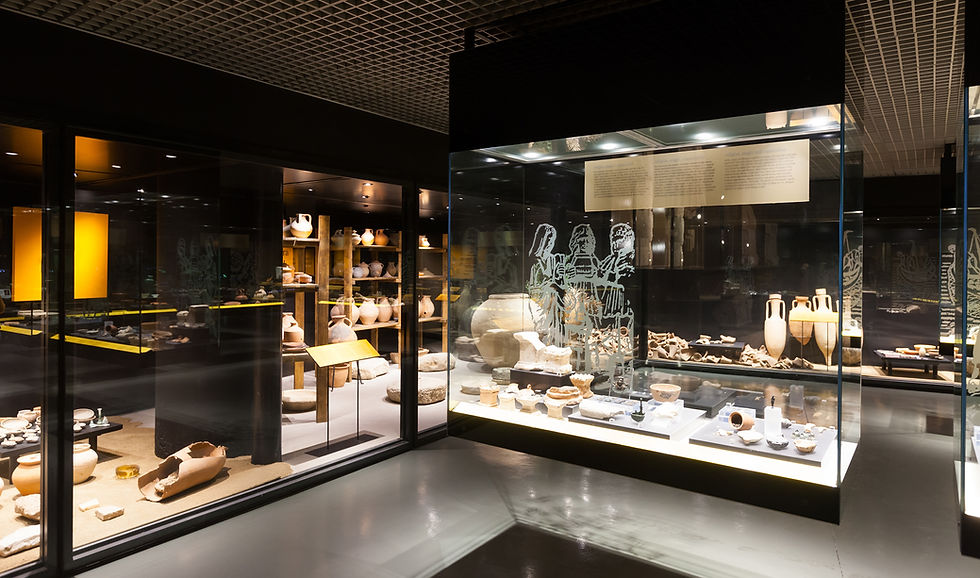
The interpretation your exhibits don't have room to hold.
Browser-based augmented reality places video, archival photographs, and 3D reconstructions beside the artifact a visitor is looking at. Experienced using the phone every visitor already has.
No app download. No headsets. No additions to the exhibit case.
Every museum has stories that won't fit on a label.
The extended context a curator knows about a specific artifact.
The reconstruction of a site as it looked in 1830. The archival photograph, the collector's letter, the scientific technique behind how a piece was made. All of it exists in institutional knowledge. Most of it never reaches the visitor standing in front of the case.
A visitor scans near an exhibit and the additional layer appears in context: video, image, or 3D reconstruction, tied to the specific artifact or gallery they're looking at. The physical exhibit doesn't change. Signage doesn't proliferate. No device fleet needs managing, because the experience runs on the phone already in the visitor's hand.
This is how institutions extend interpretation into the spaces they've already designed, without redesigning them.
What visitors encounter.

.png)
Extended Context
Video, archival photographs, and curatorial text that appear alongside the artifact a visitor is looking at. The depth a curator knows, place where the visitor is already paying attention.


3D Reconstructions
A missing fragment restored. A building shown as it stood. A ritual object rebuilt in place. Pieces of the collection completed for the visitor without altering the artifact.

.png)
First-Person Voices
Letters, interviews, and recorded narration keyed to the exhibits they describe. The voices or expertise behind the objects, surfaced where the objects sit.


Scientific Detail
The technique behind how a piece was made. The conservation work behind what survived. The research a visitor would otherwise need a gallery talk to hear.
What institutions get.
Longer dwell at featured exhibits
A path for label-skippers
Engagement data for grants and boards
Interpretation without exhibit redesign